19 August 2026

This is the first of a series of posts I intend to make on the 19th of every month. It is part of a personal decade of remembrance of the Spanish Revolution that will stretch from 19 July 2026 until the centenary of the initial suppression of the Fascist rising in Barcelona – 19 July 2036. The intention is to highlight the relevance of the experience of the Spanish Revolution for praxis today, for our time and our historic conjuncture.

By way of preface I offer the following extract from Daniel Guerin’s For a Libertarian Communism:

The twentieth century is, for the anarchists, one of revolutionary practice. They played an active role in the two Russian Revolutions and, even more, in the Spanish Revolution.
The study of the authentic anarchist doctrine, as it was formed in the nineteenth century, shows that anarchy is neither disorganization, disorder, nor atomization, but the search for true organization, true unity, true order, and true centralization, which can only reside, not in authority, coercion, or compulsion exercised from the top down, but in free, spontaneous, federalist association from the bottom up. As for the study of the Russian and Spanish revolutions and the role played in them by the anarchists, it shows that contrary to the false legend believed by some, these great and tragic experiences show that libertarian socialism was largely in the right against the socialism I’ll call “authoritarian”.
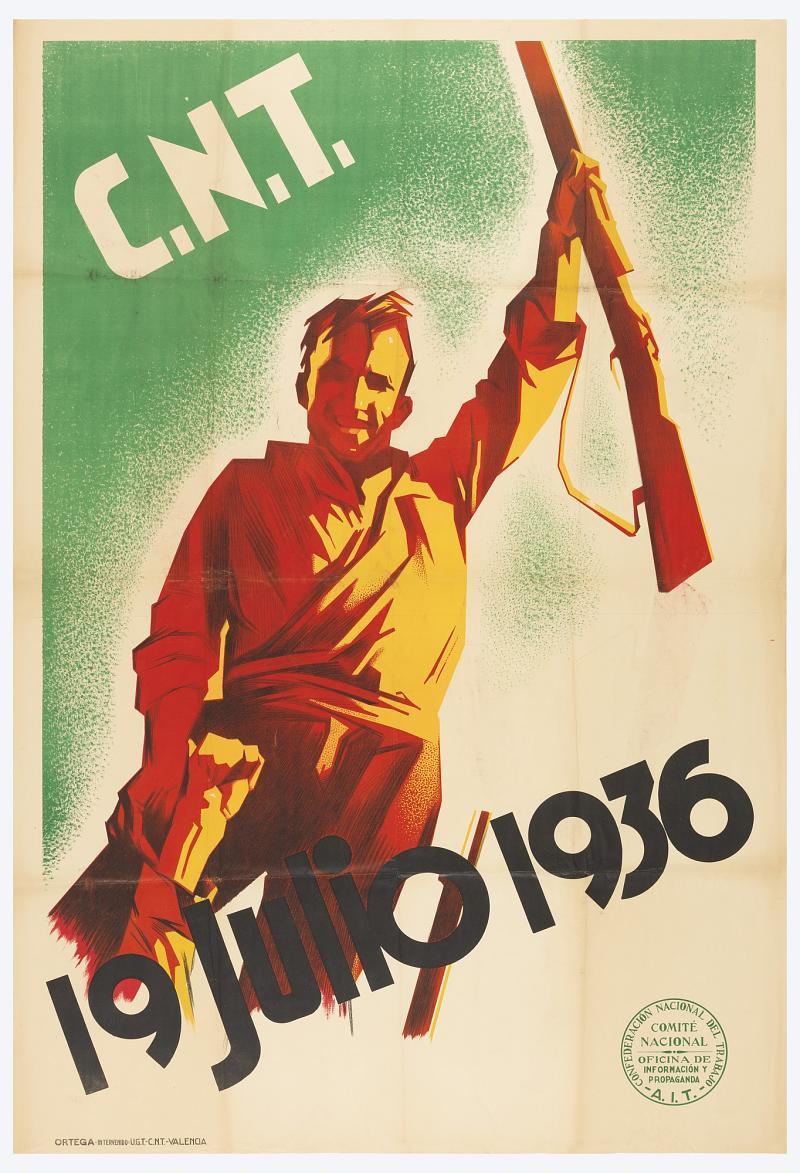
Daniel Guerin: For a Libertarian Communism (PM Press 2017, pg 42)


Trump, the GOP, and ‘patriotic treason’

The prospect of Donald Trump running for President again is at first glance astonishing. January 6, 2020 was an insurrection aiming at the overthrow of the Constitutional Republic itself. It is as if, in the wake of the Revolutionary War, Benedict Arnold was campaigning for President while running on the Loyalist vote. Or Jefferson Davis running in the post-Reconstruction Era on a ‘keep the blacks in their place’ platform, and being greeted with acclaim in Northern cites experiencing the first waves of the Great Migration. It truly seems like the US has lost the plot. But has it? Historian Gerald Horne suggests that ‘Patriotism’ in the US is foundationally treasonous. Detailing the history of illicit commercial transactions by Britain’s North American colonists with their Empire’s rivals in the decades preceding the Revolution, Horne says:

“The traditional narrative of the republic’s founding has emphasized insufficiently the amorality and trans-border ethos that came to define capitalism—which often was at odds with traditional notions of patriotism and even sovereignty.” Horne, The counter-revolution of 1776: slave resistance and the origins of the United States of America (2014: 18)

If anything, the armed forces seem to be a repository of “traditional notions of patriotism and sovereignty”. But is this still the case? Has the emergence of the now post-Cold War military industrial complex set in motion such dynamics of corruption that the high command can no longer be counted on? Has the diffusion of Christian Zionist and Evangelical anti-Enlightenment beliefs in the ranks—as in the political class—fatally undermined any commitment to the “traditional notions of patriotism and sovereignty” upon which the Republic is ostensibly founded? A second Trump presidency, if it comes about, will be the moment of truth.


Gaza’s two-way mirror

Our vicarious experience of the ongoing genocide in Gaza is enabled by the proliferation of a complex of technologies—the cell phone, internet, social media. We are getting an unprecedented understanding of the experience of a genocide as it is happening, through the eyes of its victims. But at the same time, it provides the perpetrators of the genocide with a real-time window on the effects its atrocities are having on the minds and bodies of their victims. We are seeing a genocide through the eyes of its victims, but at the same time, through them, through the eyes of its perpetrators. Palestinians have waged a constant battle to remain connected, despite Israel’s attempts to impose an internet/media blackout of the atrocities. But Israel’s role in the provision and development of these technologies has always been driven by the motivation of surveillance. To the extent that Israel makes calculated decisions to permit Palestinians access, it does so for that reason. Given the searing immediacy of the images and sounds coming from Gaza, Israel appears to have decided that Holocaust Memory as it has previously existed has served its usefulness. The world will not be the same after this. The state has entered an endgame, but on a battlefield it may not be fully equipped to contest.


Pakistan-Iran exchanges of 2024 Jan 18

A war between Iran and Pakistan was not on my bingo card. But with China’s economy stalled and shrinking fast, it makes sense that Pakistan would look to rethink its geopolitical position and return to the good graces of a new-old imperial patron.


Purpose of the blog

A brief note on the purpose of the blog: just a place to record brief postcard length notes on topics geo/political.